Closing the Access Gap in Neuro-Modulation Therapy
Limited access to advanced neuro-modulation therapy restricts patients’ ability to effectively manage prevalent mental health and neurological conditions. Existing clinic-based models require repeated in-person visits, making therapy hard to sustain for patients in rural locations, with mobility challenges, or demanding schedules.
At the same time, integrating a new neuro-wearable into existing healthcare platforms and workflows is non-trivial. Providers are already juggling multiple systems; introducing yet another tool risks fragmentation instead of relief. Without a cohesive experience, the therapy’s potential transformative impact on neurological health is diminished.
Observations & Insights – Practice
- Shadowed neurology practices to observe real sessions, staff hand-offs, and daily routines.
- Captured end-to-end workflows, from intake to therapy delivery and follow-up.
- Documented pain points and unmet needs across both providers and patients in context.
- Identified friction in scheduling, documentation, and remote follow-up that software could meaningfully reduce.

Contextual Observations – Providers
- Fragmented information: Patient data scattered across EMR, spreadsheets, and email trails made it difficult to get a single source of truth.
- No centralized patient overview: Providers lacked one place to see therapy adherence, session history, and outcomes for each patient.
- Remote delivery & monitoring: Strong desire to deliver therapy remotely and monitor patients between visits without adding more manual work.

Contextual Observations – Patients
- Accessibility barriers: Travel time, clinic hours, and cost made sustained access to neuro-therapies difficult.
- On-the-go access: Patients wanted a simple way to see their therapy plan, upcoming sessions, and progress from their phone.
- Support & reassurance: Direct visibility into their data and easy access to the care team increased confidence in the therapy.

Scope & User Roles
Patient
End users receiving neuro-stimulation therapy via the wearable device and mobile app.
Provider
Neurologists and clinicians prescribing therapy, monitoring progress, and managing patient care.
Admin
Practice administrators managing billing, scheduling, and operational workflows.
Support
Technical and customer support teams assisting with device setup and troubleshooting.
User Journey
Mapped the end-to-end journey for both patients and providers, from first consultation and screening, through therapy prescription, device onboarding, at-home sessions, and ongoing monitoring and review.
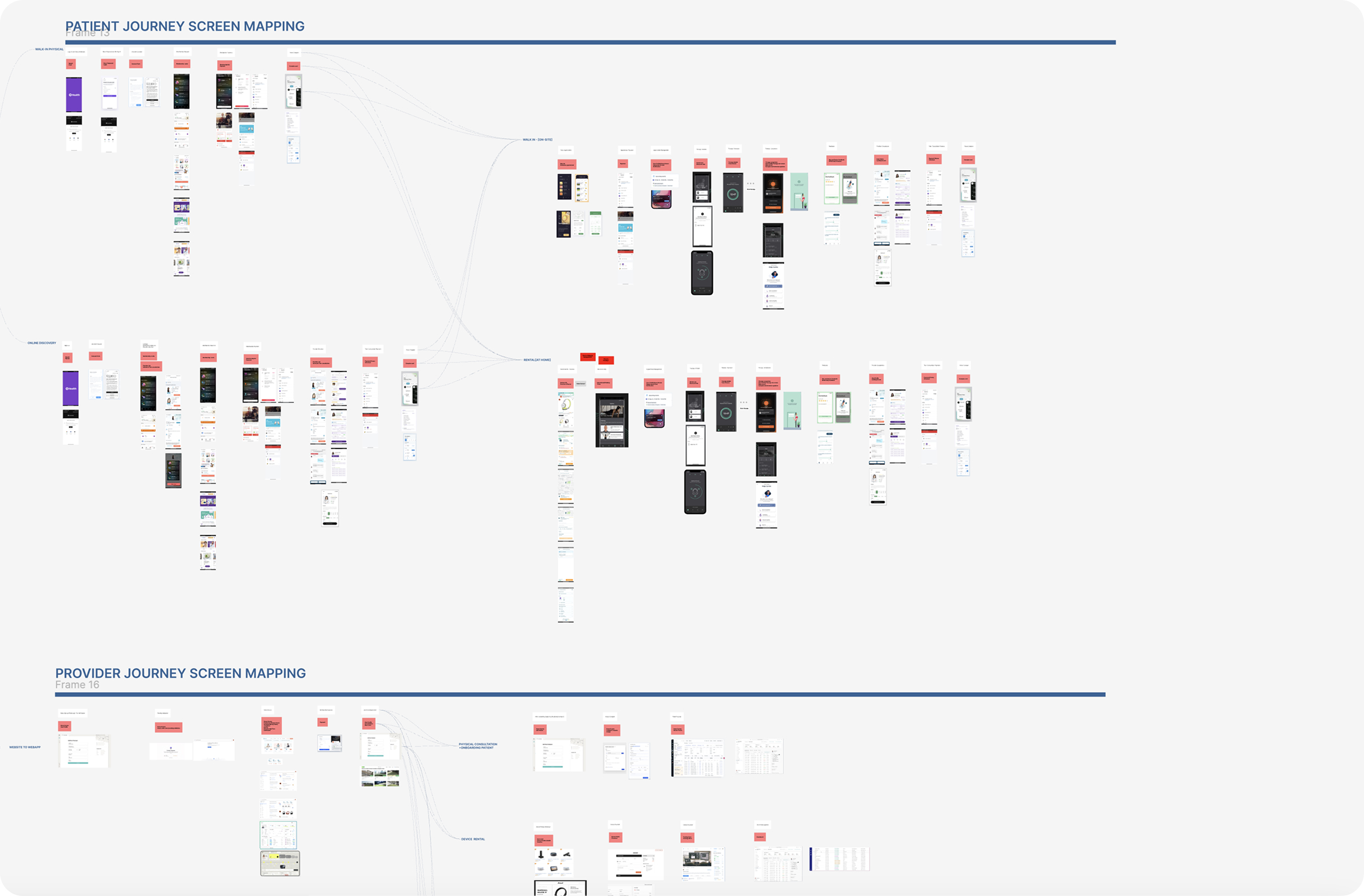
Early Explorations
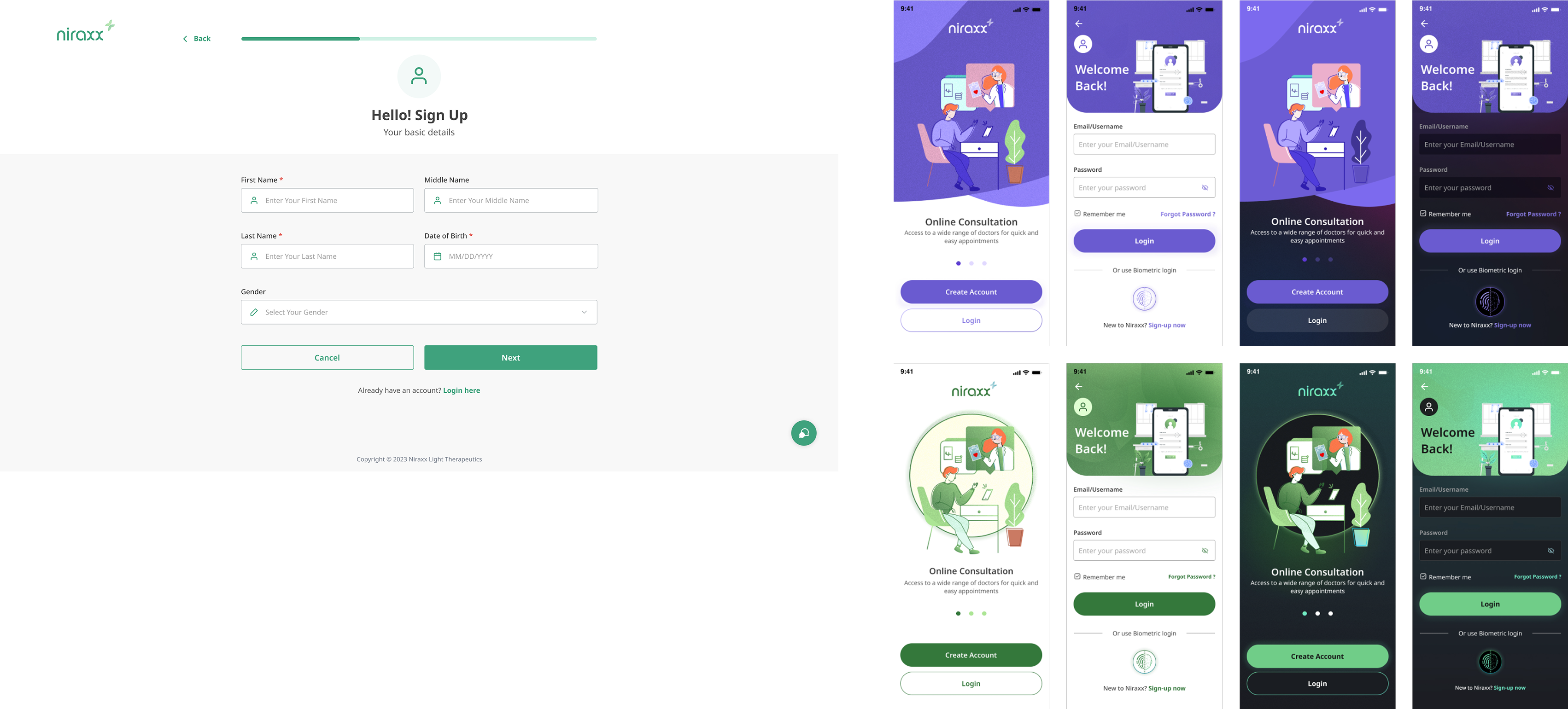
Explored multiple IA and layout directions for both the patient mobile app and provider web platform: from tab-based navigation to card-first dashboards, iterating with stakeholders to identify the most intuitive structure for day-to-day usage.
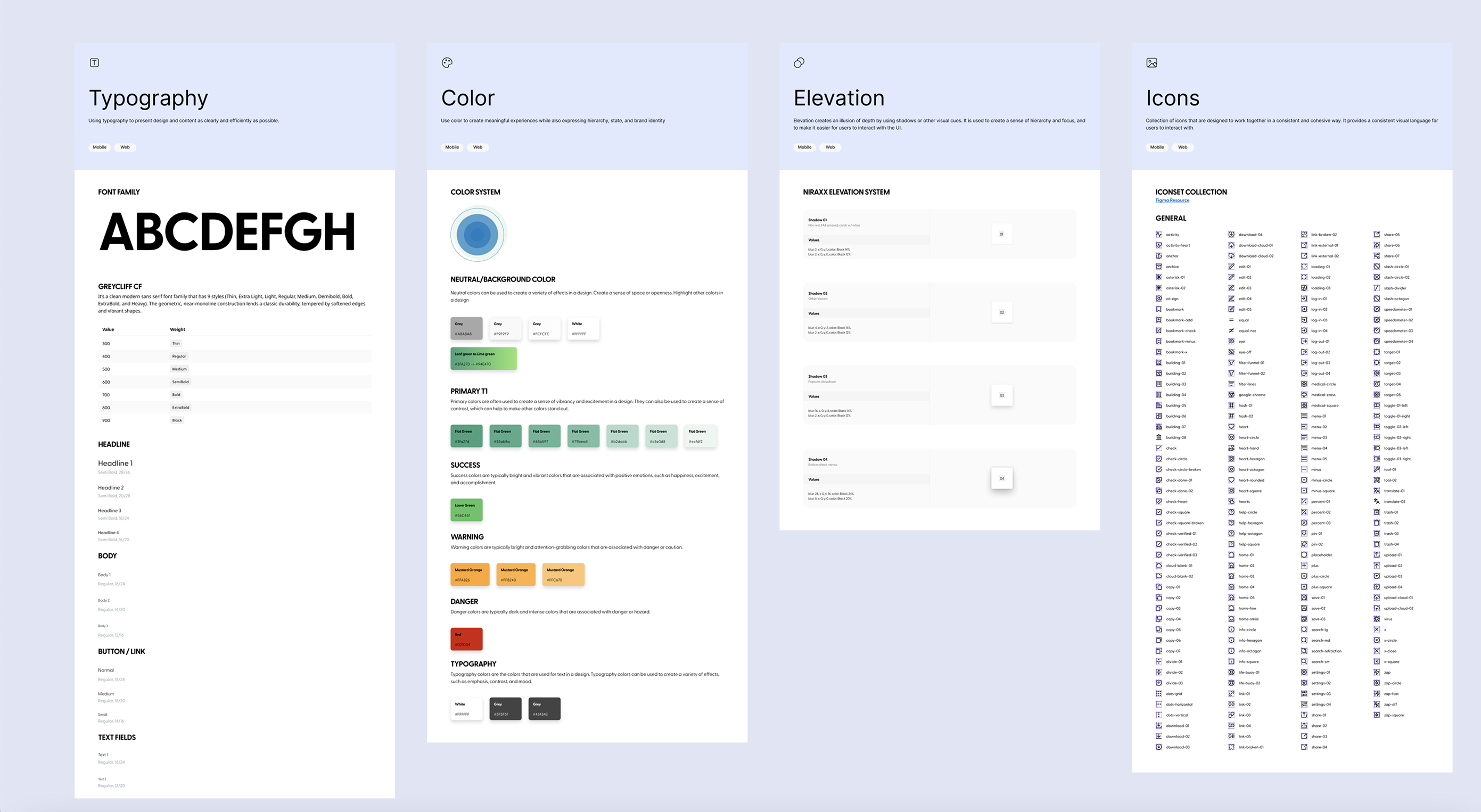
Design System
Built a custom design system to support both medical-grade clarity and consumer-grade usability. The system includes typography scales, color tokens tuned for accessibility, responsive grid foundations, and a shared component library for mobile and web.
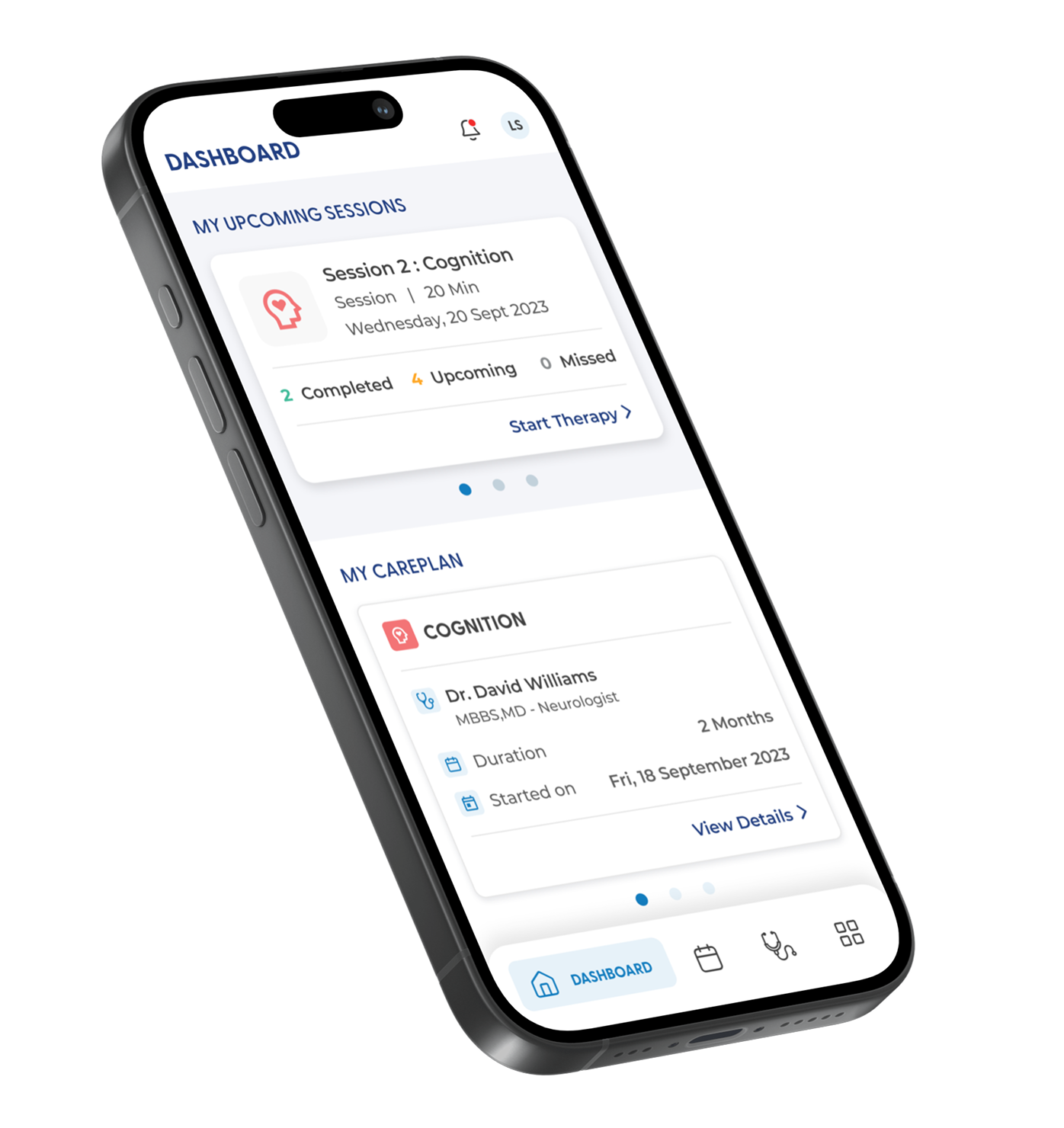
Design – Patient Dashboard
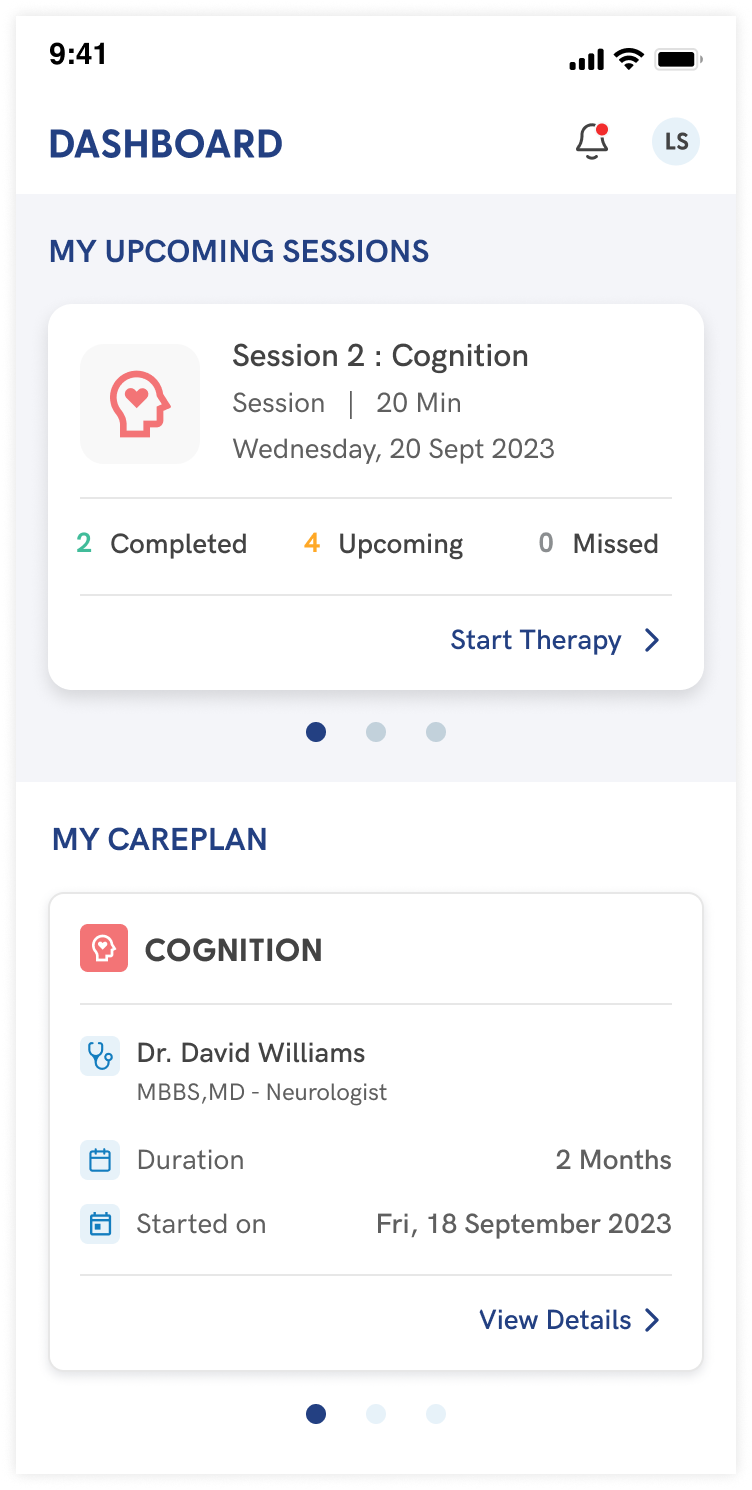
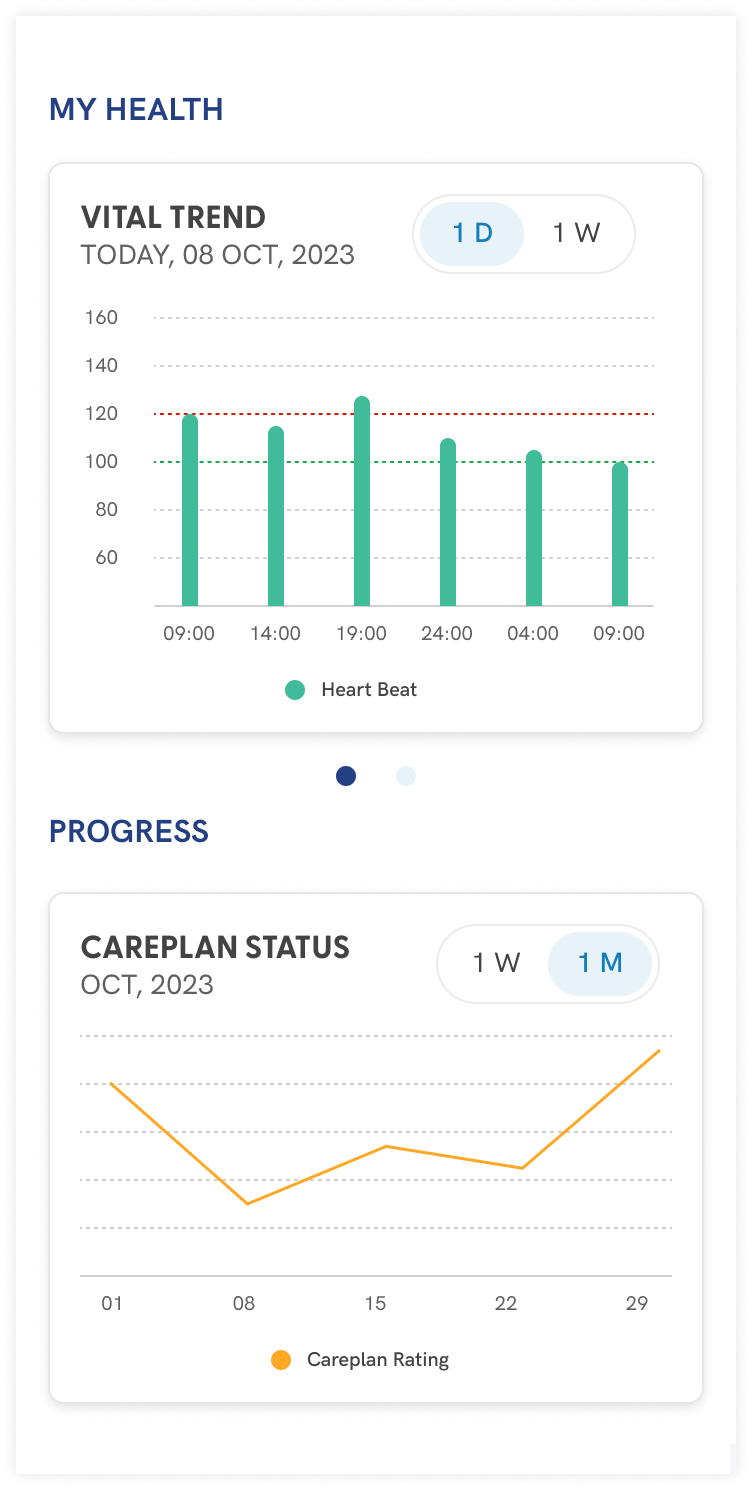
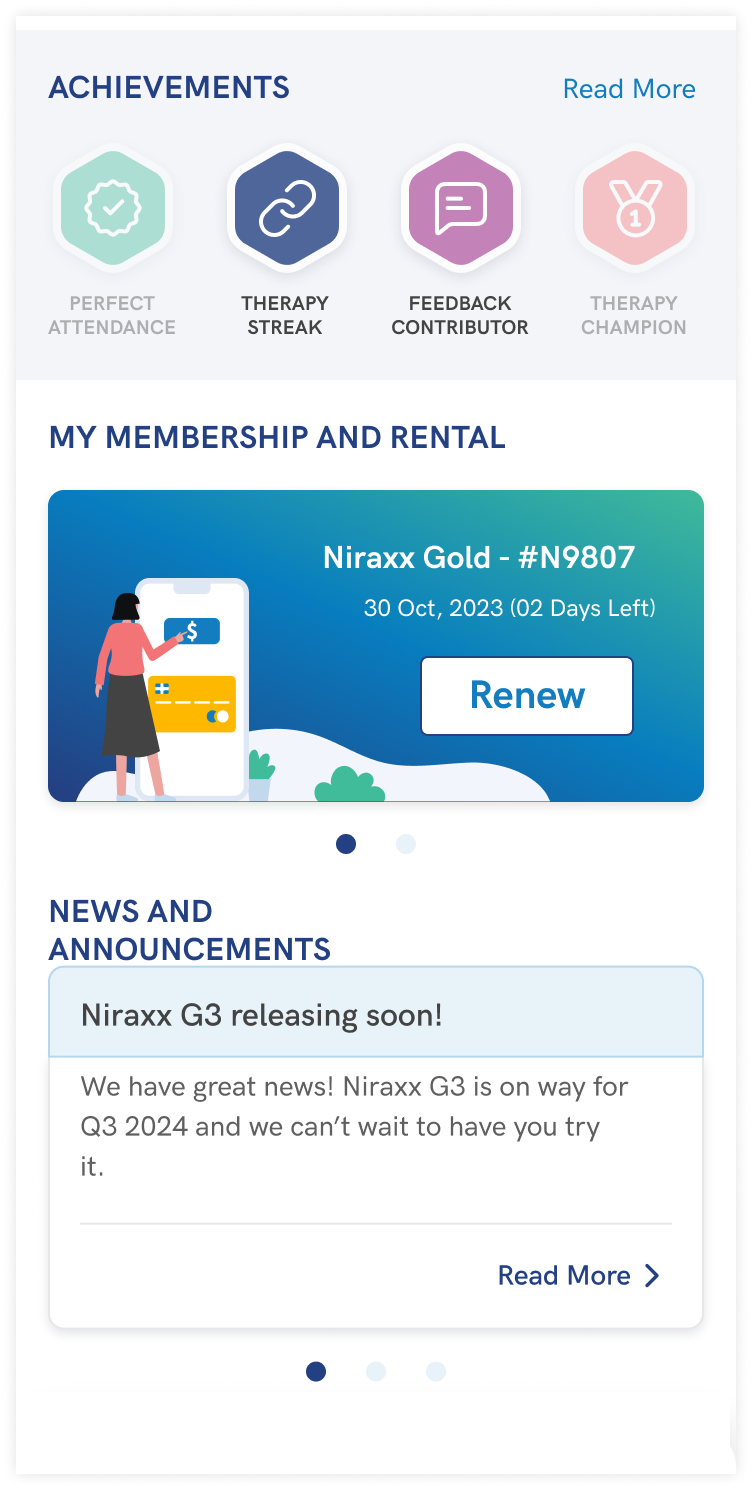
The patient dashboard on the mobile app provides an intuitive, centralized view to manage care. Patients can track appointments, care plans, health metrics, progress, and relevant updates, giving them an on-the-go snapshot of their wellbeing journey.
The design synthesizes key components into a single, calm surface so patients can quickly see what’s next, what’s improving, and where they may need to follow up—with minimal cognitive load.
Patient Dashboard – Screens
Design – Patient Therapy
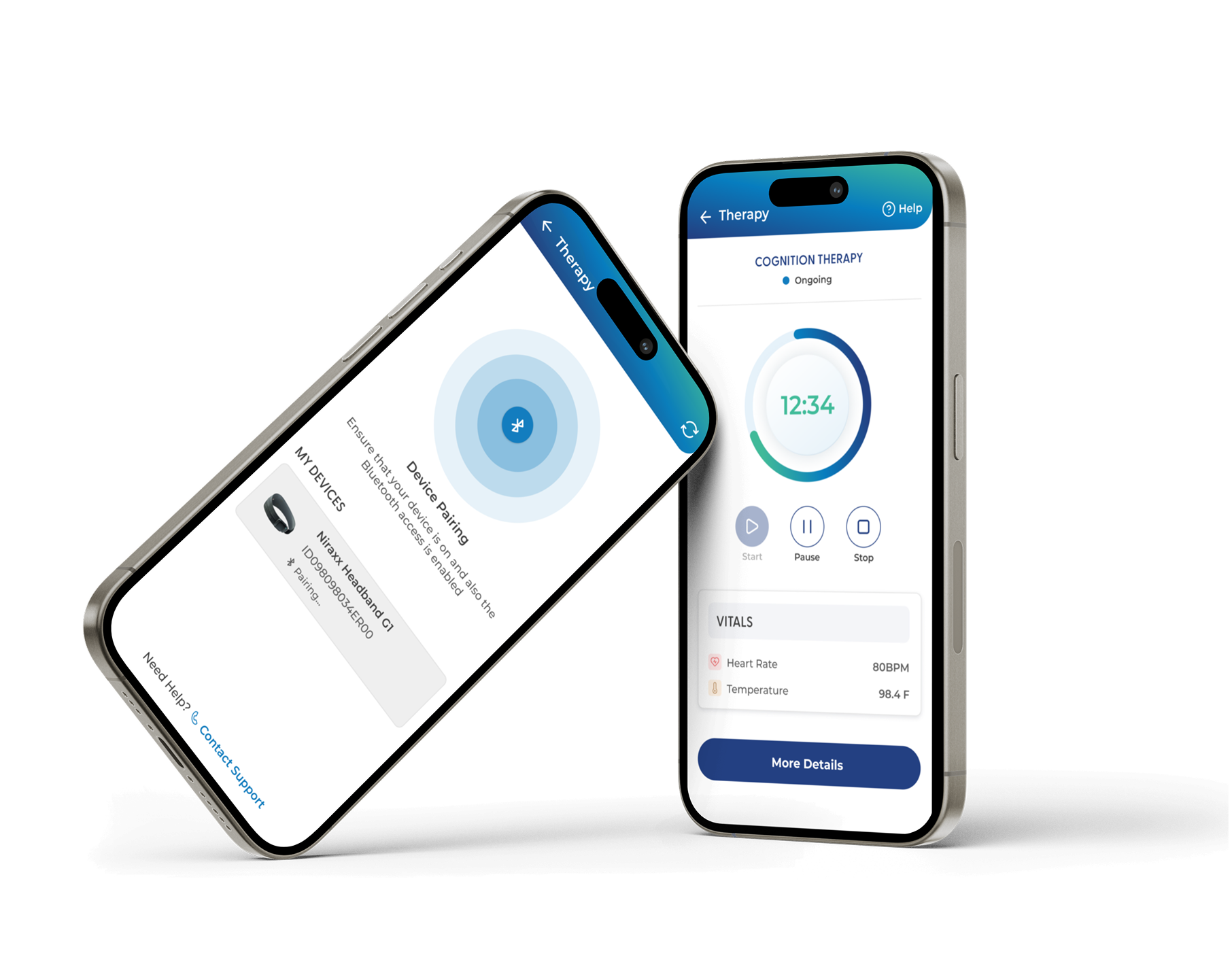
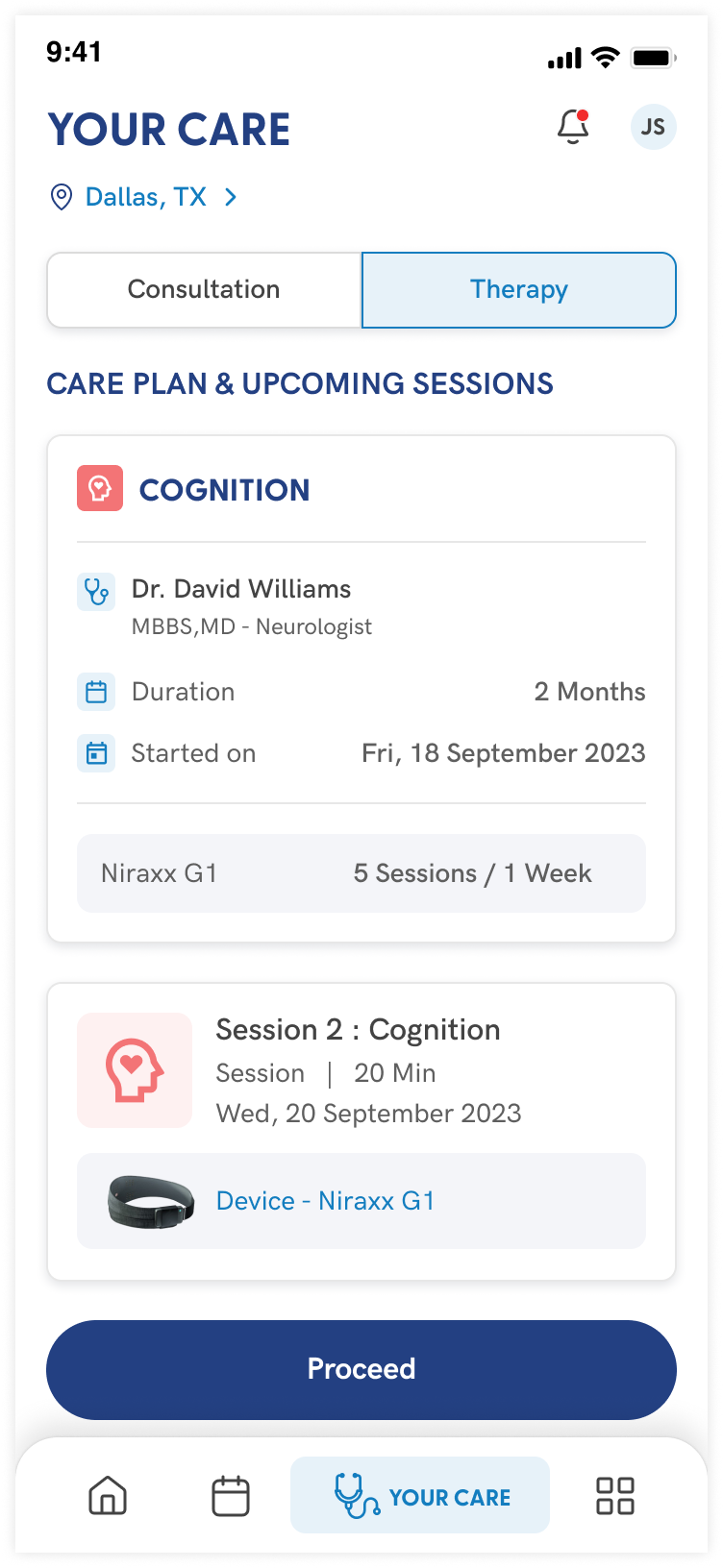
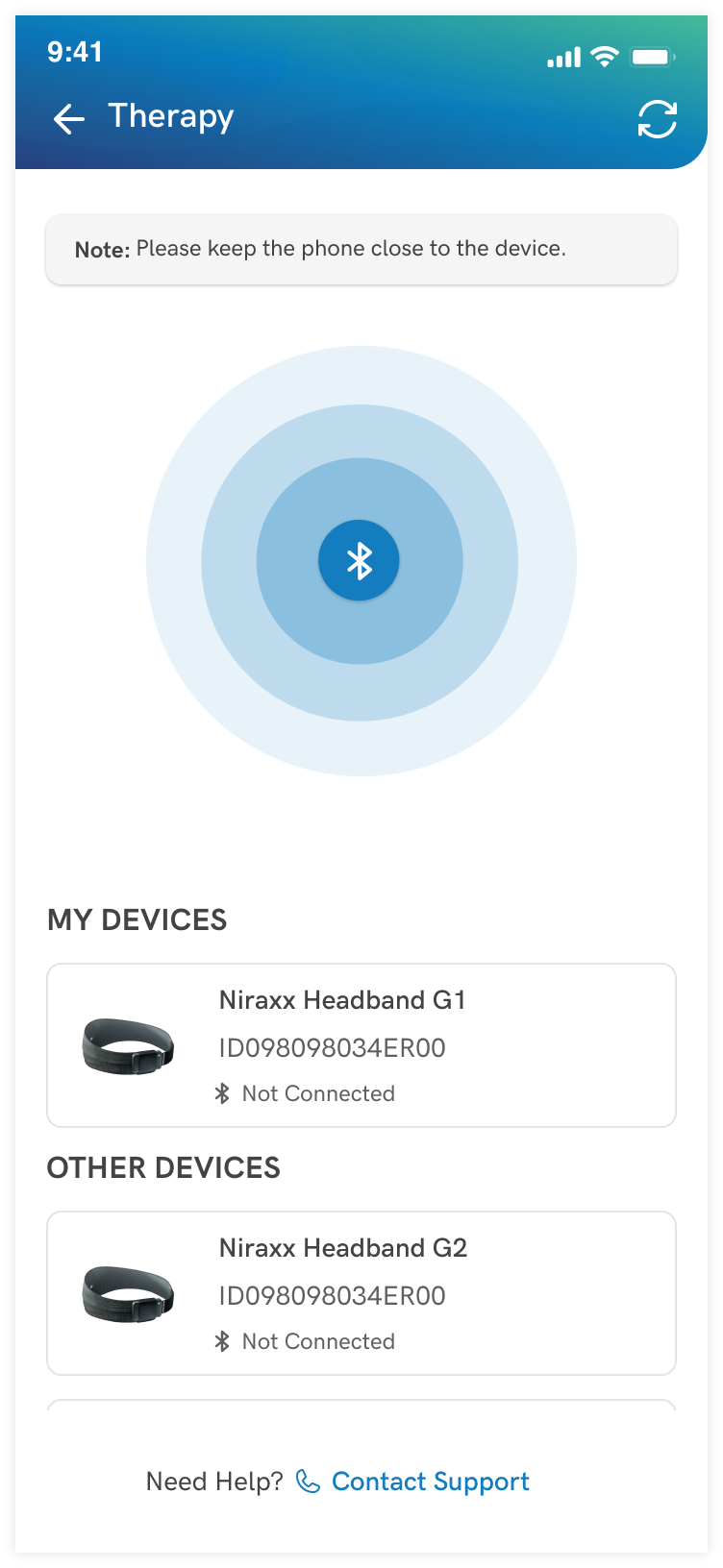
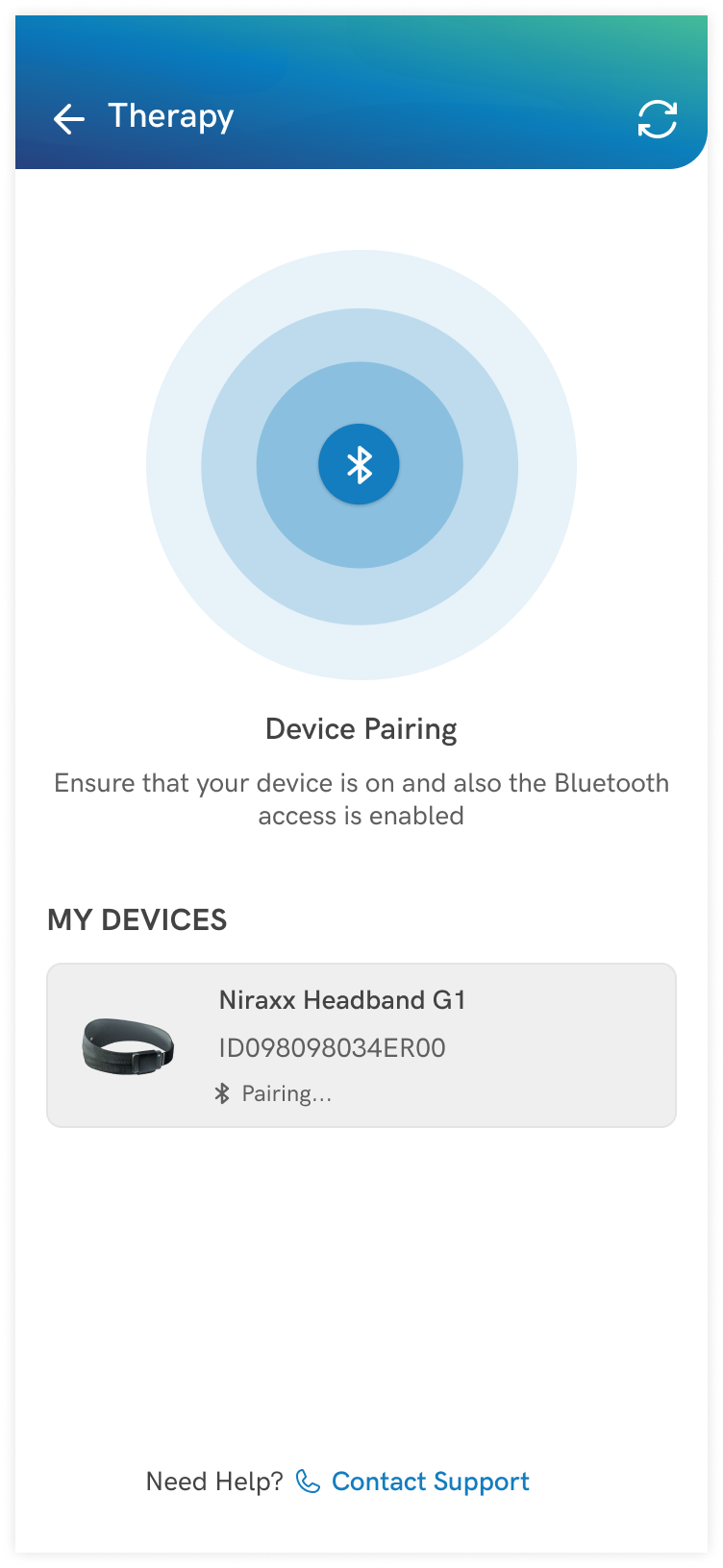
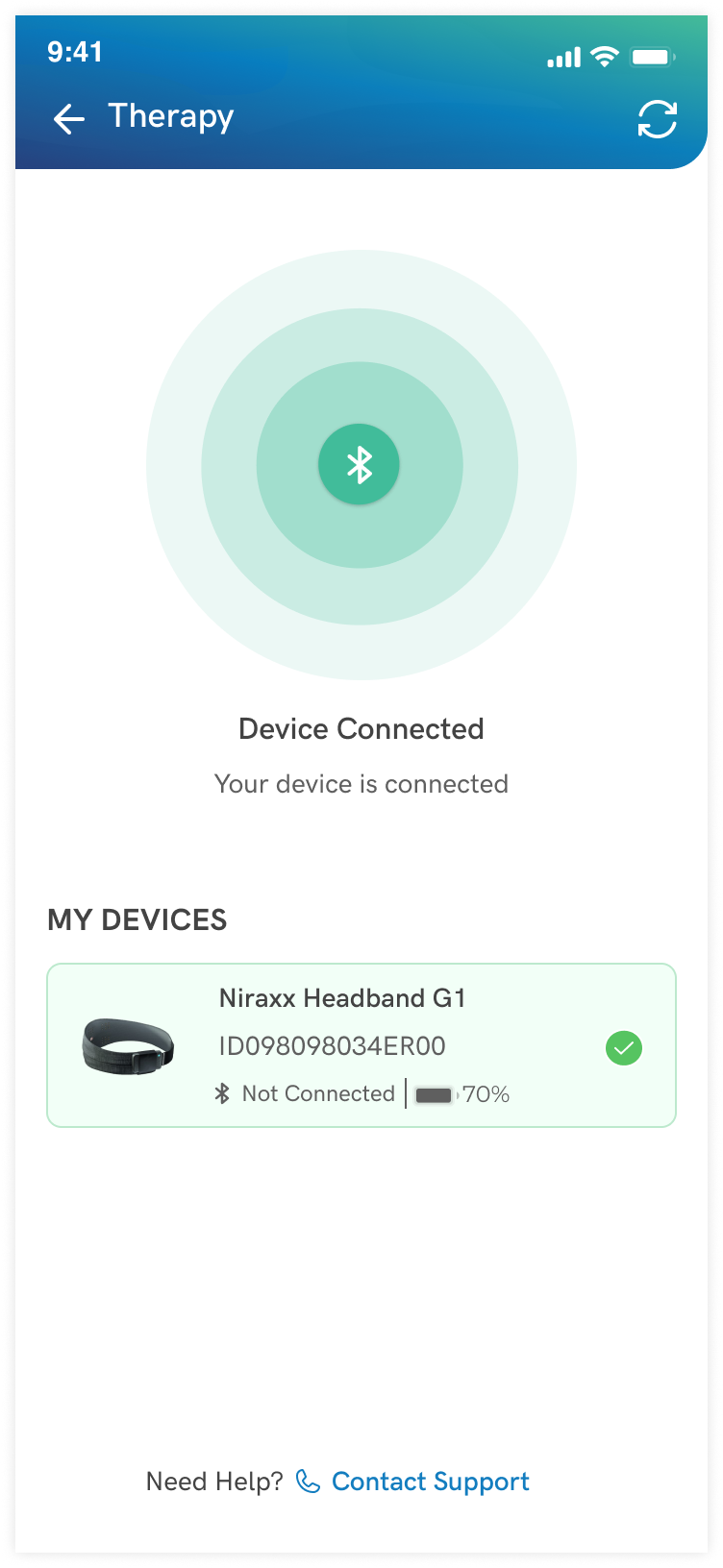
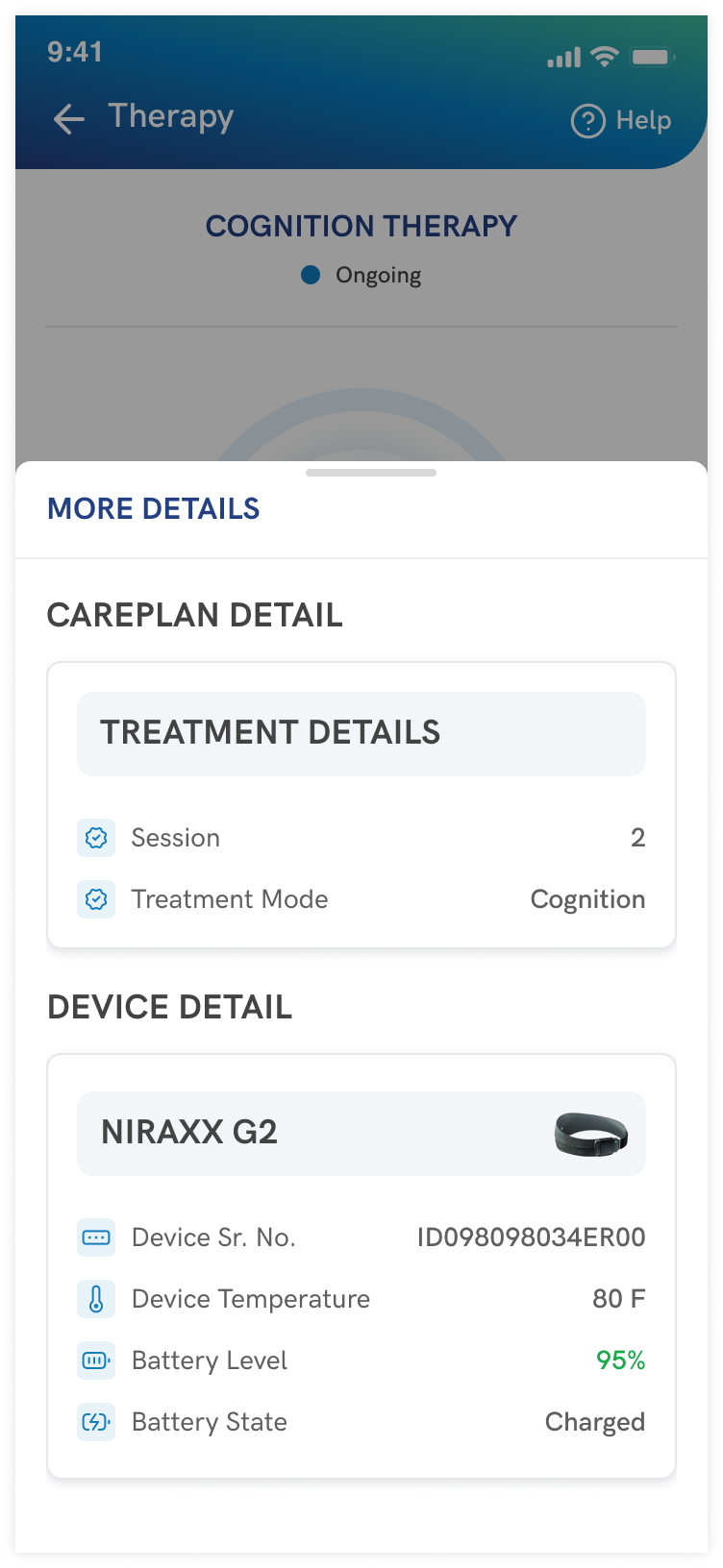
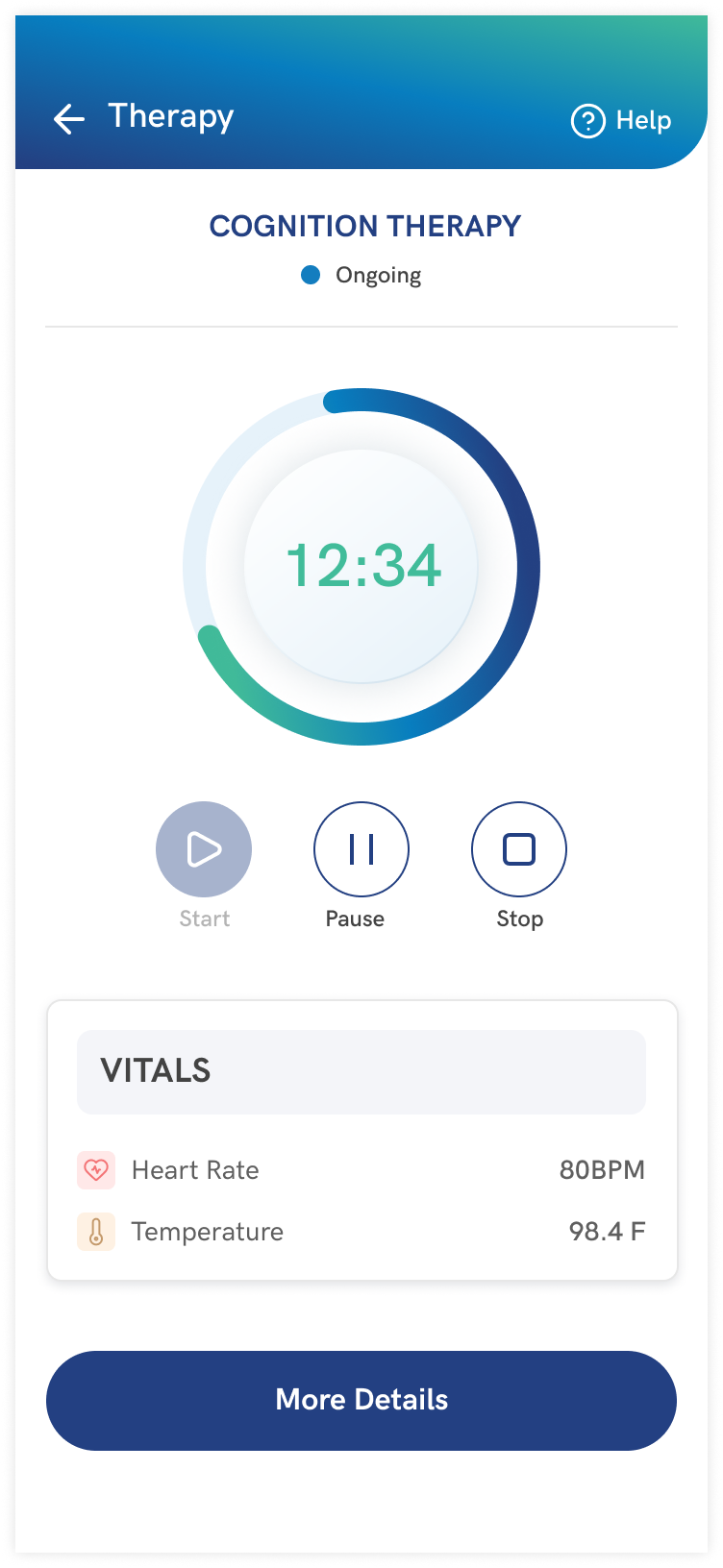
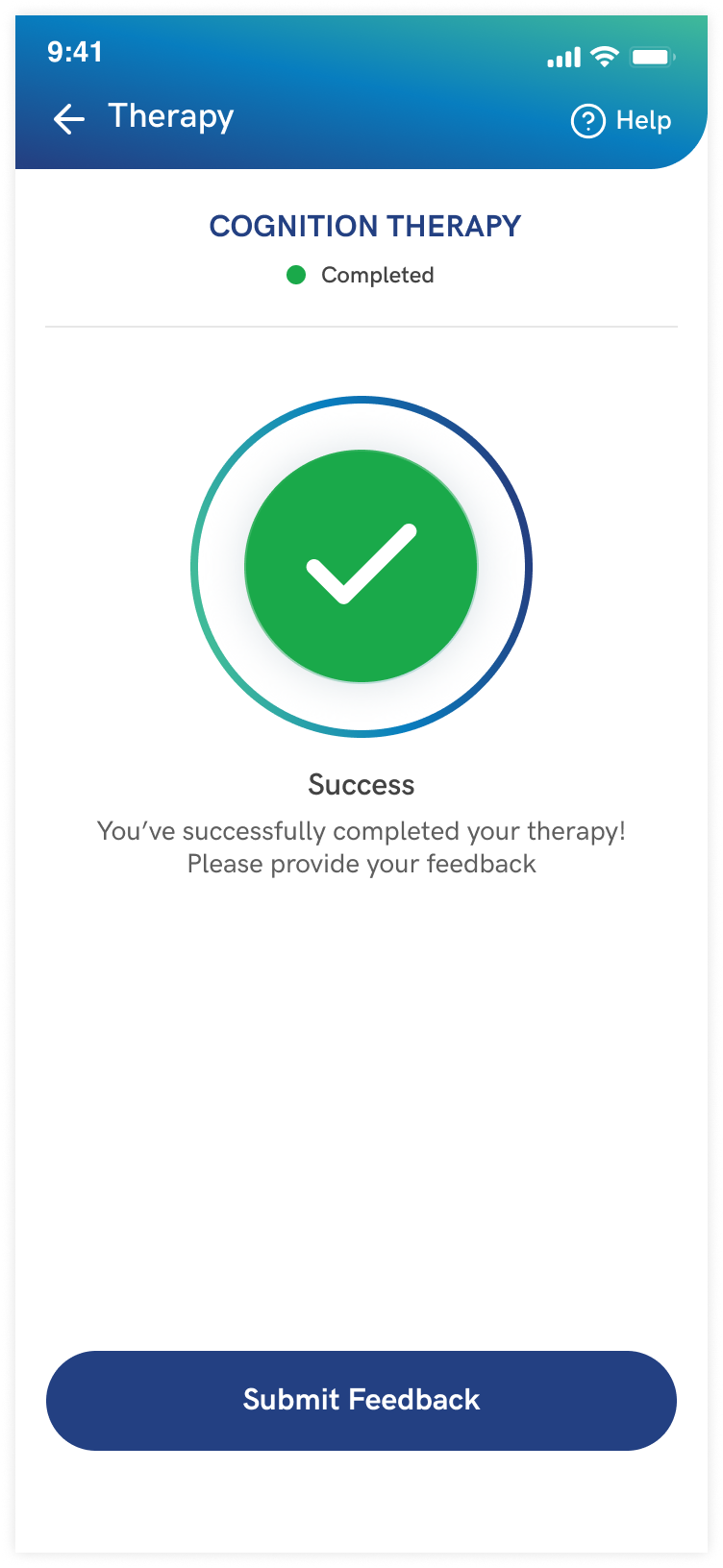
Patients start their neuromodulation care sessions at home or in-clinic by connecting the PBM wearable via Bluetooth. Once connected, they can begin a personalized session with a single tap.
During each session, patients have full control to pause, resume, or stop treatment. The app surfaces care plan details, device status, and remaining time, making the experience transparent and reassuring while still medically guided.
Patient Therapy – Screens
Design – Provider Dashboard
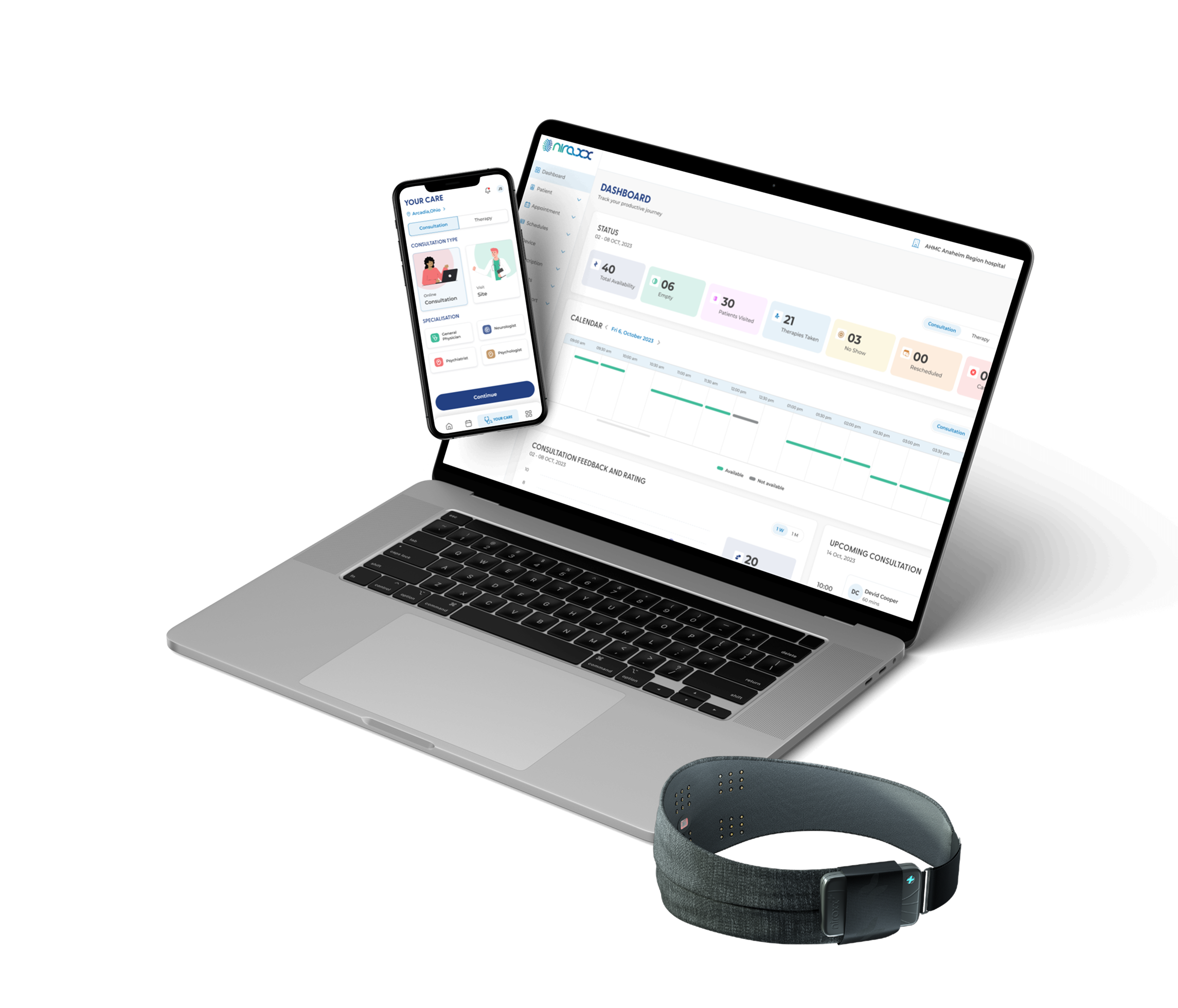
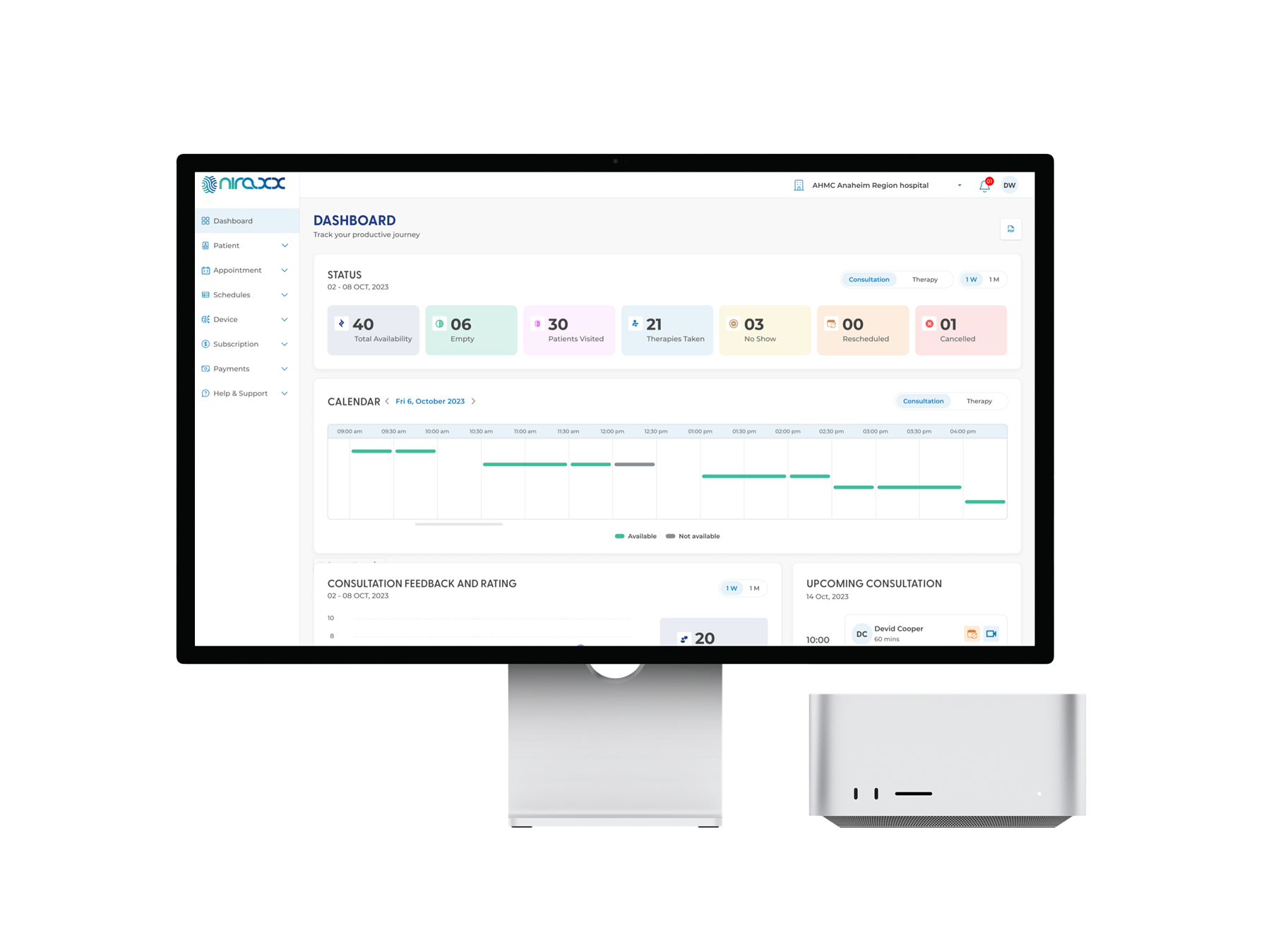
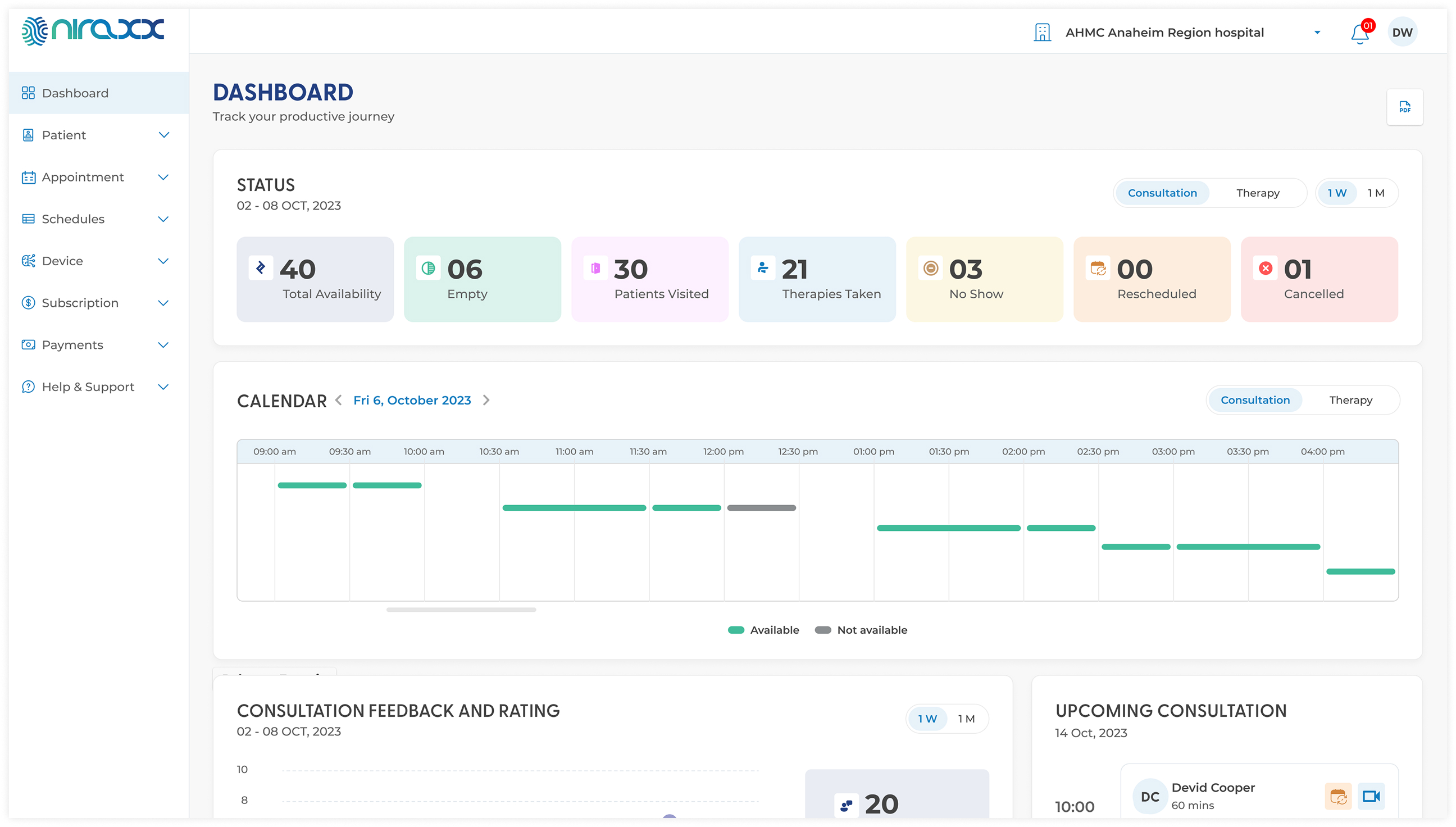
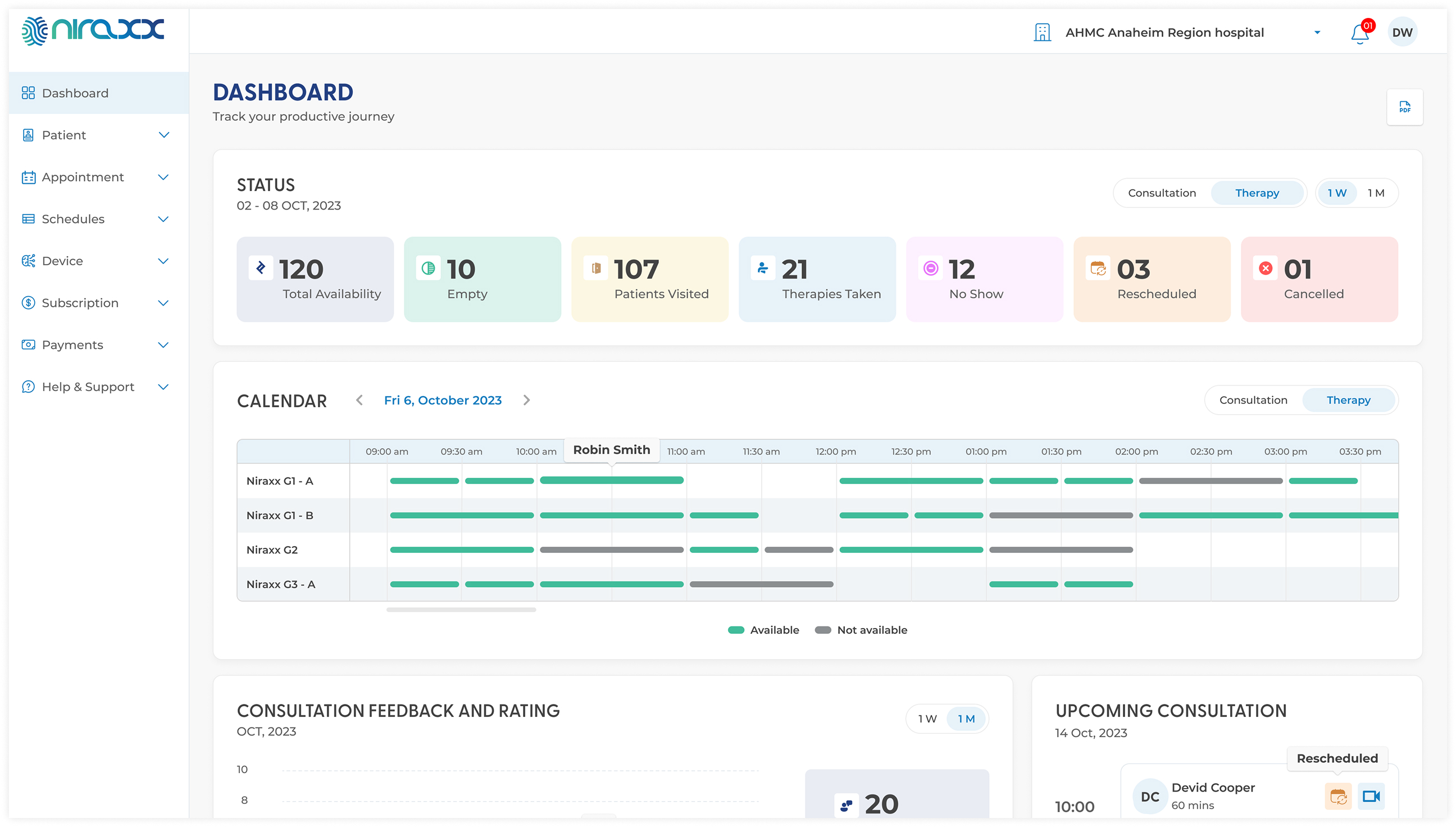
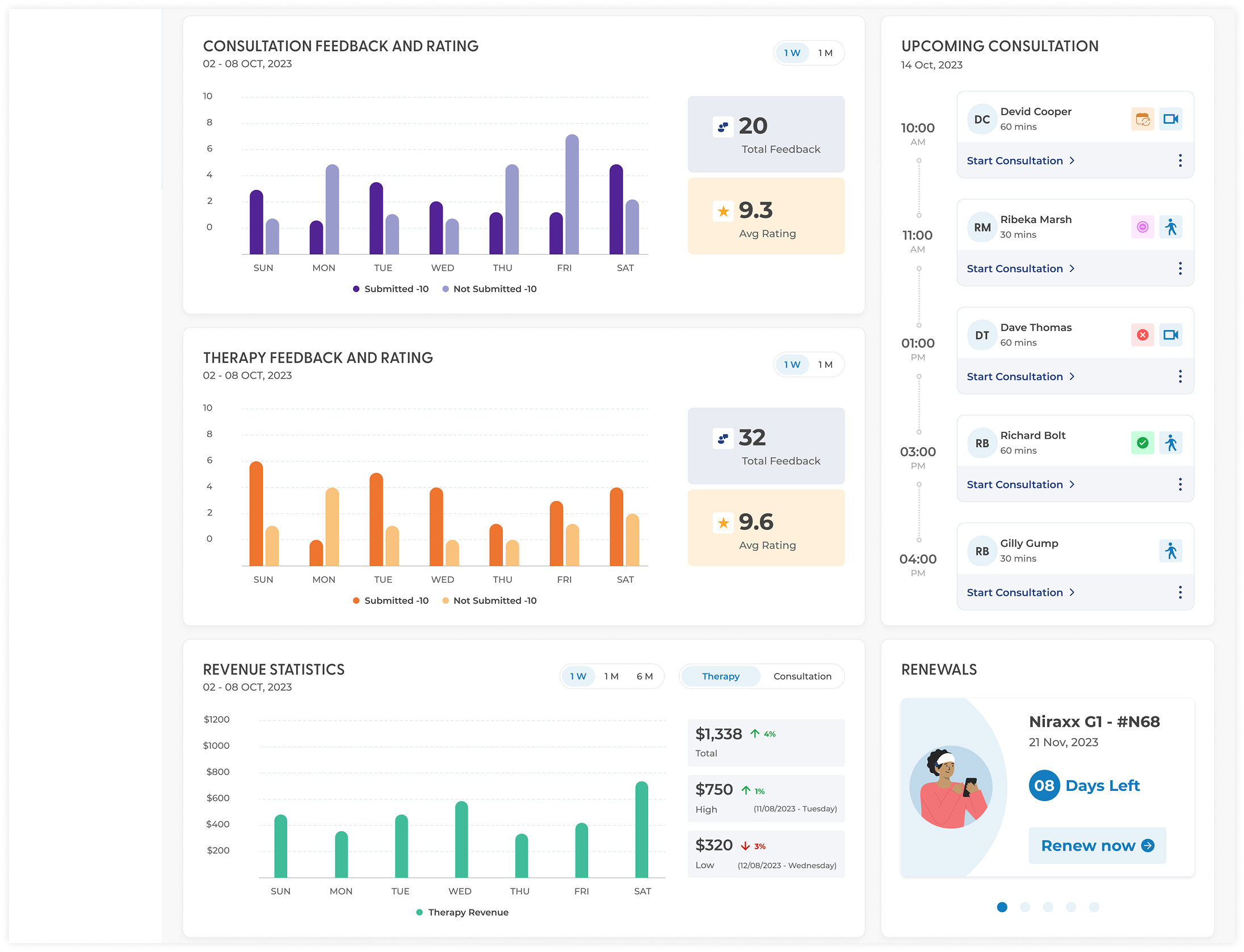
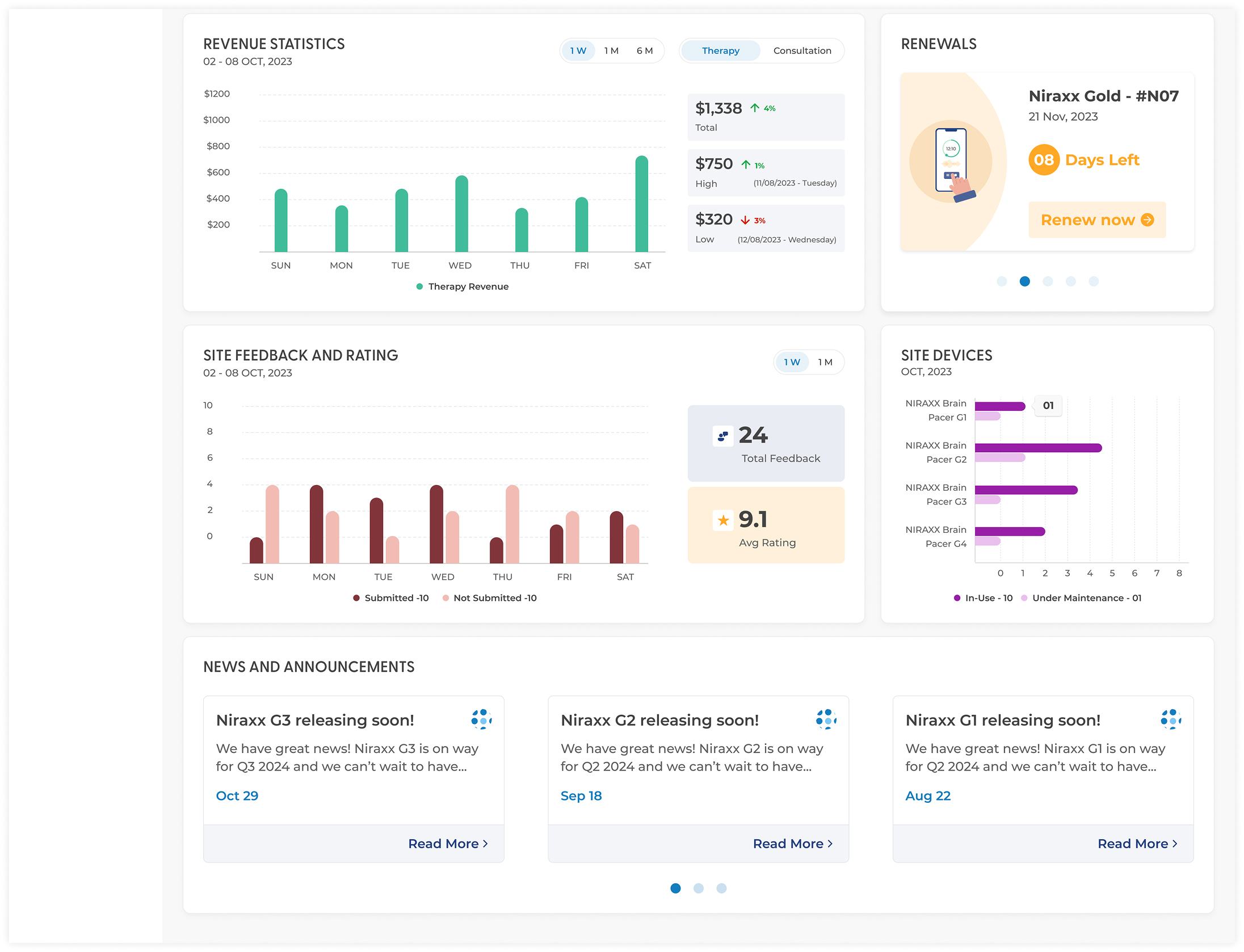
The provider dashboard on the web platform gives neurology practices an intuitive, centralized view of their operations: KPIs, calendar, appointments, revenue stats, feedback, ratings, and curated news relevant to their specialty.
By consolidating these signals into a single, flexible canvas, providers can quickly understand clinic health, spot issues, and drill into individual patients without jumping between tools.
Provider Dashboard – Screens
Design – Provider Consultation
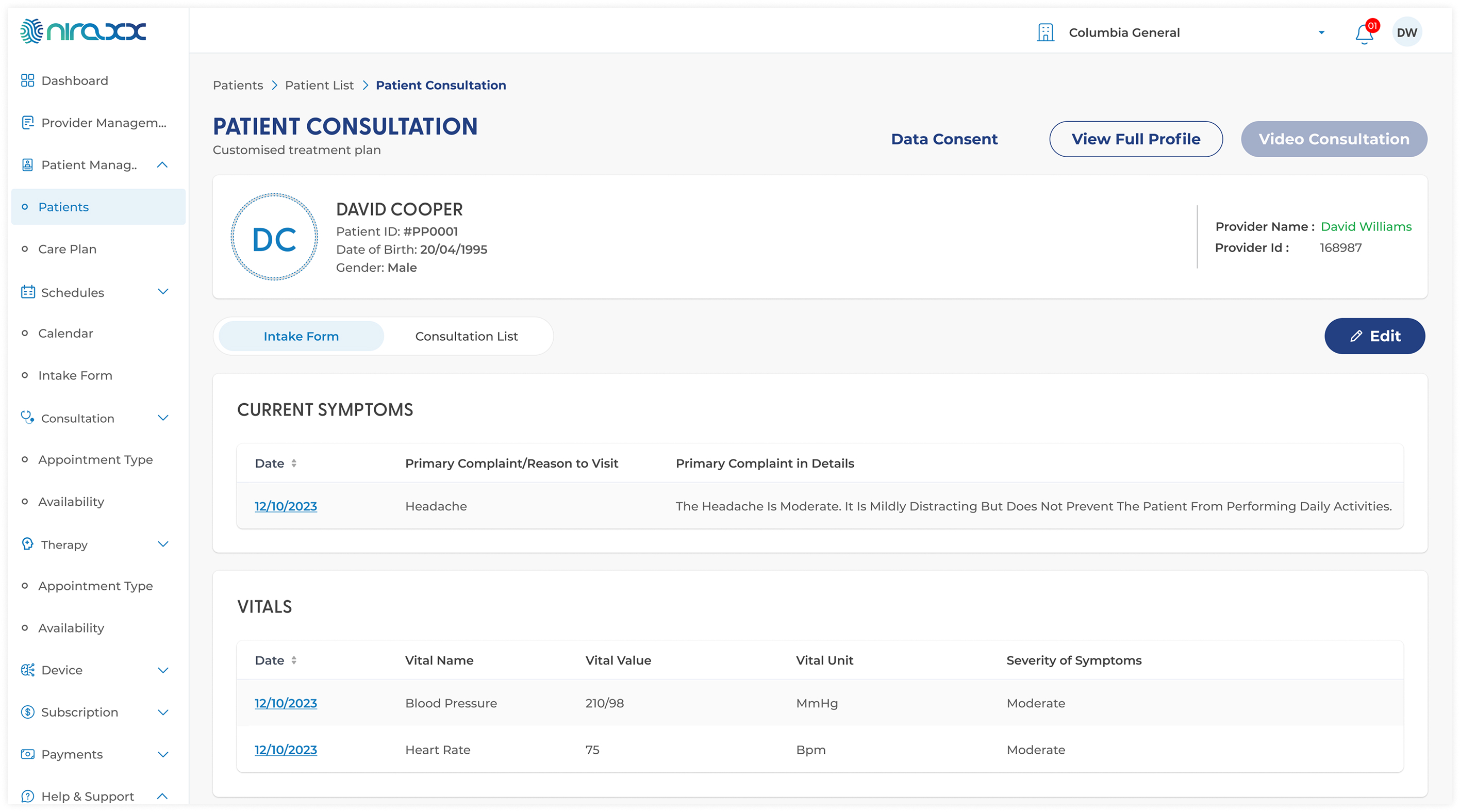
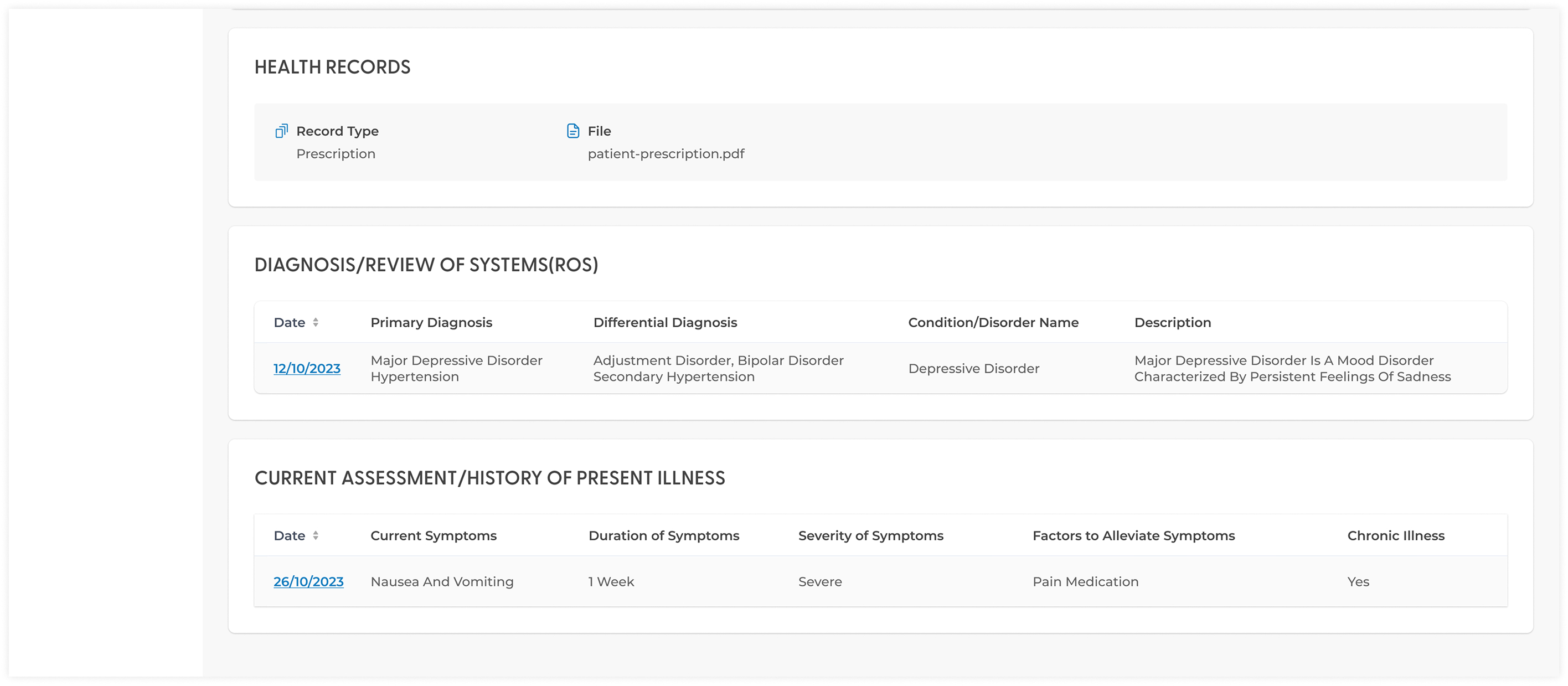
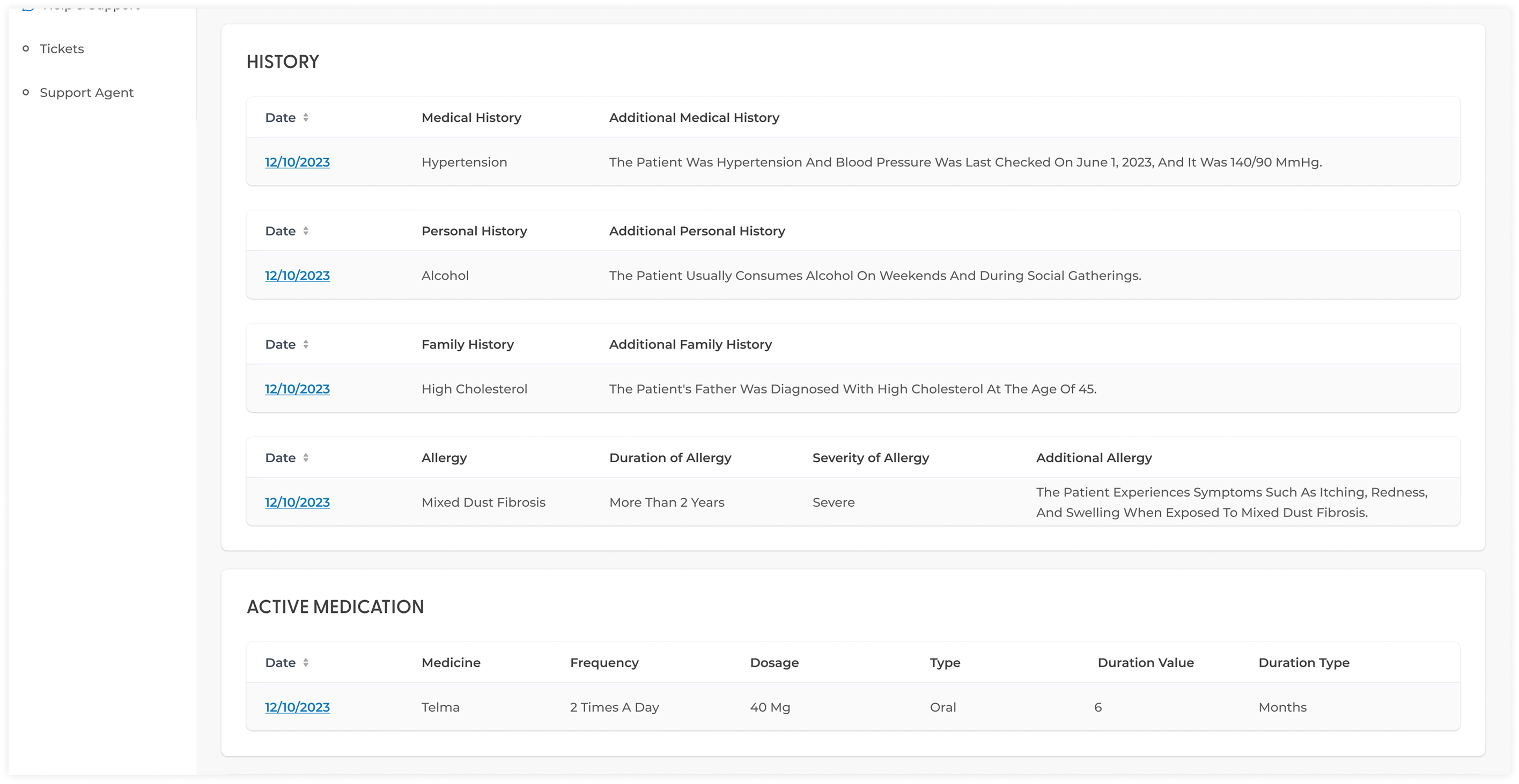
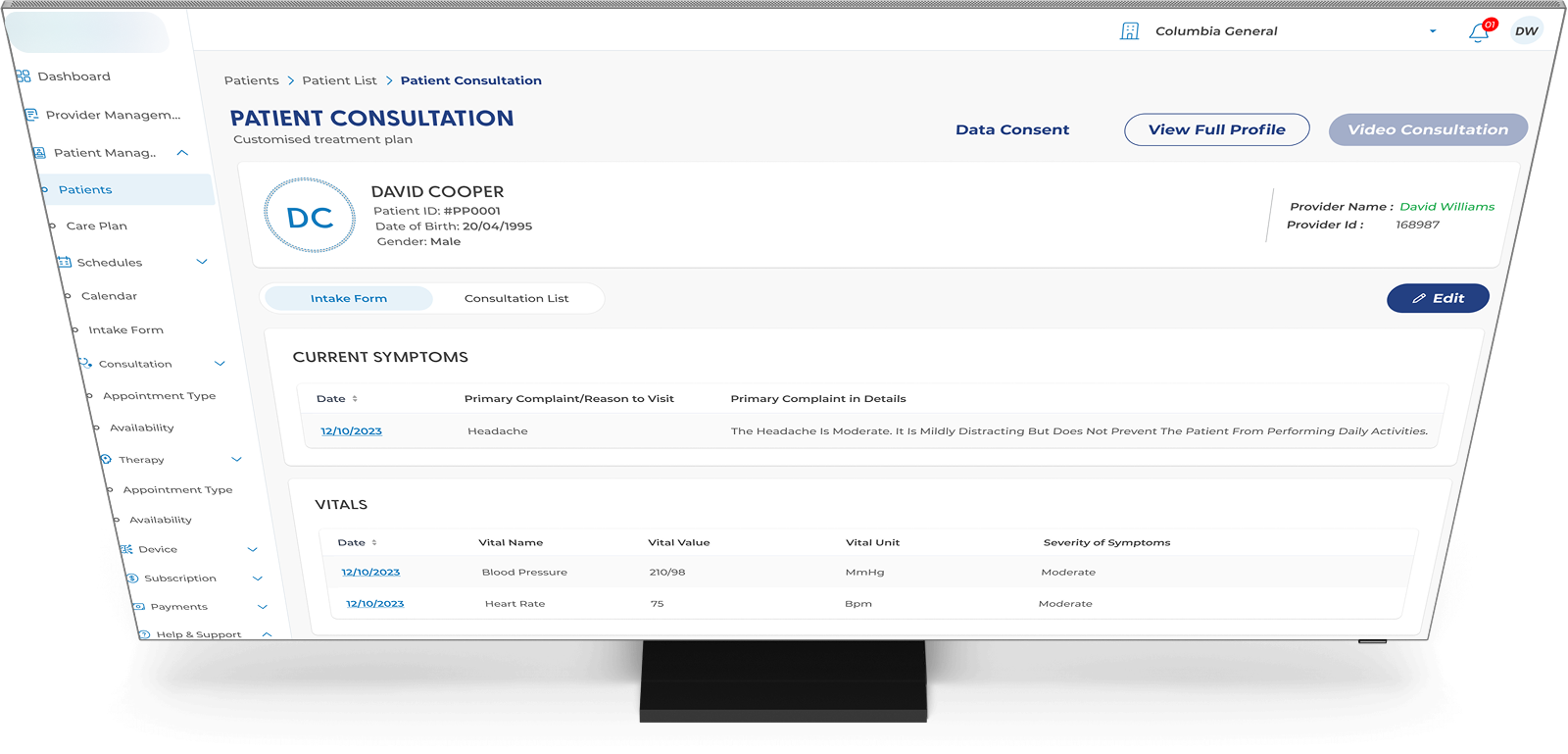
The consultation flow enables providers to review intake forms, log consultation details, prescribe therapy sessions, and manage follow-ups from one centralized interface.
The design brings critical patient information such as history, current plan, device usage, and notes into a single, actionable view, reducing clicks and helping providers stay present with the patient instead of the software.
Provider Consultation – Screens